Summary
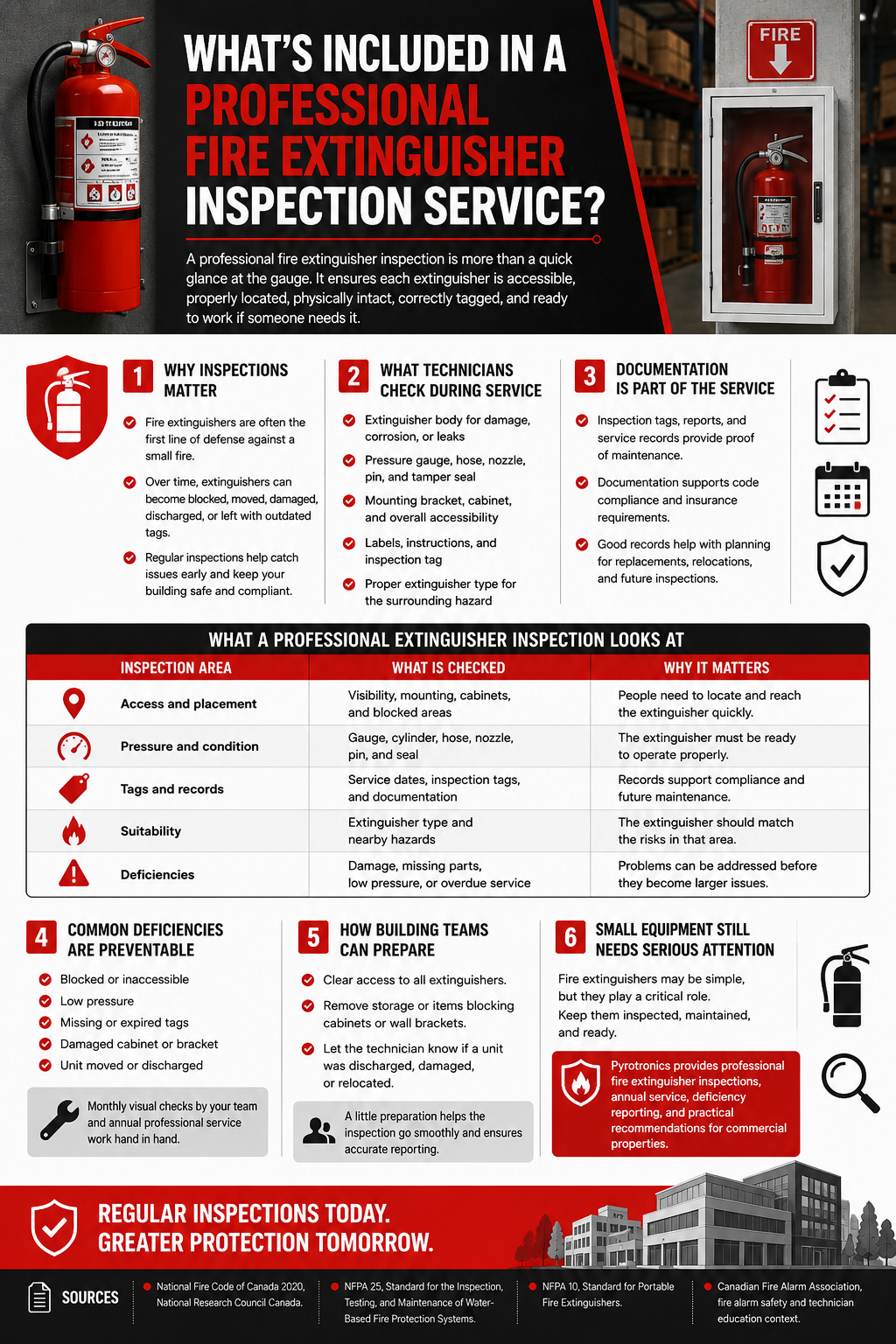
A professional fire extinguisher inspection involves a lot more than checking whether the gauge is in the green. The goal is to make sure every extinguisher in the building is where it should be, easy to access, in good condition, and ready to work if it’s ever needed.
For building owners and property managers, the value goes beyond compliance. Regular inspections help catch small issues before they turn into larger problems, provide clear documentation, and offer peace of mind that an important piece of fire protection equipment has not been overlooked.
Why Extinguisher Inspections Matter
Fire extinguishers are often the first line of defense when a small fire starts. In the right situation, they can stop a fire from spreading and help prevent damage, downtime, or injury.
The challenge is that extinguishers are easy to forget about.
They sit quietly on walls, in hallways, inside cabinets, and near exits. Months go by without anyone paying much attention to them. During that time, an extinguisher might get blocked by storage, moved during renovations, damaged by equipment, discharged without being reported, or left with an outdated inspection tag.
Most of these issues are not dramatic. In fact, they are usually the result of everyday building activity. The problem is that nobody notices until the extinguisher is actually needed or an inspection takes place.
That is why routine inspections matter. They help identify these small issues before they become larger safety or compliance concerns.
What Technicians Check During Service
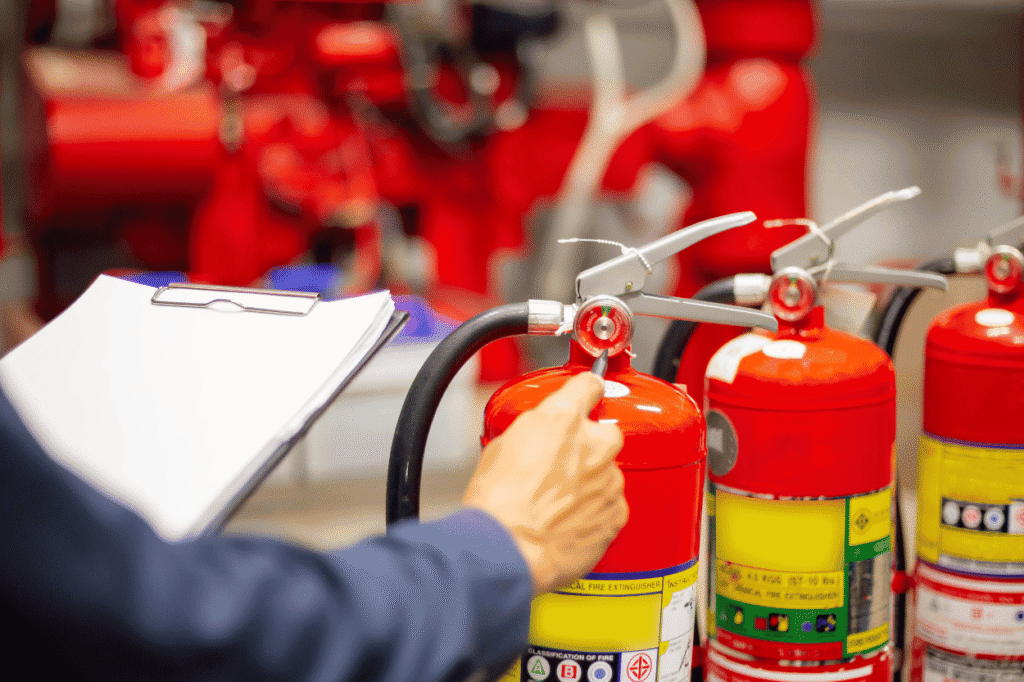
During an annual extinguisher inspection, the technician looks at much more than the pressure gauge.
The extinguisher body is checked for damage, corrosion, leaks, dents, or anything else that could affect performance. The hose, nozzle, pin, tamper seal, mounting bracket, labels, and inspection tag are also reviewed to make sure everything is present and in good condition.
Location matters too.
An extinguisher may technically be in the building, but if it is hidden behind boxes or difficult to reach, it may not be useful during an emergency. Part of the inspection involves making sure extinguishers remain visible, accessible, and properly mounted.
The technician may also verify that the extinguisher type is appropriate for the area it is protecting. An office, commercial kitchen, warehouse, mechanical room, and industrial workspace can all present different fire hazards. Using the wrong extinguisher type can create problems when it matters most.
What a Professional Extinguisher Inspection Looks At
| Inspection Area | What Is Checked | Why It Matters |
|---|---|---|
| Access and placement | Visibility, mounting, cabinets, and blocked areas | People need to locate and reach the extinguisher quickly |
| Pressure and condition | Gauge, cylinder, hose, nozzle, pin, and seal | The extinguisher must be ready to operate properly |
| Tags and records | Service dates, inspection tags, and documentation | Records support compliance and future maintenance |
| Suitability | Extinguisher type and nearby hazards | The extinguisher should match the risks in that area |
| Deficiencies | Damage, missing parts, low pressure, or overdue service | Problems can be addressed before they become larger issues |
Documentation Is Part of the Service
One of the most overlooked parts of an extinguisher inspection is the paperwork.
A professional inspection should leave behind a clear record of what was checked, what condition the equipment was in, and whether any deficiencies were found. Inspection tags, service reports, maintenance dates, and corrective actions all play an important role.
If an authority having jurisdiction, insurer, landlord, or internal safety team requests proof of maintenance, those records should be easy to produce.
Good documentation also helps with long-term planning. Maybe several extinguishers are nearing replacement age. Maybe a certain area of the building keeps experiencing damage to equipment. Maybe renovations have changed the fire risks in part of the property.
Those trends are often easier to spot when inspections are properly documented year after year.
Common Deficiencies Are Usually Preventable
Most extinguisher deficiencies are surprisingly simple.
An extinguisher may be blocked by stored materials. A pressure gauge may be reading low. A service tag may be missing. A cabinet may be damaged. Someone may have moved the extinguisher and never returned it to its proper location.
None of these issues are particularly complicated, but they can still create problems during inspections or emergencies.
That is why monthly visual checks by the building team work so well alongside annual professional inspections. Staff can keep an eye out for obvious issues throughout the year, while a certified technician handles the more detailed inspection, maintenance, and reporting requirements.
Together, those two layers of oversight help keep extinguishers ready for use and help prevent small issues from slipping through the cracks.
How Building Teams Can Prepare
There is not much preparation required before an extinguisher inspection, but a few simple steps can make the process smoother.
Take a walk through the building and make sure extinguishers have not been blocked by storage, furniture, equipment, or inventory. If an extinguisher has been discharged, damaged, relocated, or removed, let the technician know ahead of time.
Providing that information helps ensure the inspection accurately reflects the current condition of the building and can save time during the visit.
Small Equipment Still Needs Serious Attention
Fire extinguishers may be one of the simplest fire protection systems in a building, but they still require regular attention. Like any life safety equipment, they need to be maintained, inspected, and documented consistently to remain reliable.
When something goes wrong, nobody wants to discover that an extinguisher was inaccessible, damaged, or overdue for service.
Pyrotronics provides professional fire extinguisher inspections, annual extinguisher service, deficiency reporting, and practical recommendations for commercial buildings across a wide range of industries.
Frequently asked questions
How often should fire extinguishers be professionally inspected?
Most commercial buildings should have their fire extinguishers professionally inspected at least once a year. Building teams should also complete regular visual checks throughout the year to make sure extinguishers are visible, accessible, charged, and not damaged.
What does a technician check during a fire extinguisher inspection?
A technician checks the extinguisher body, pressure gauge, hose, nozzle, pin, tamper seal, mounting bracket, labels, and inspection tag. They also confirm that the extinguisher is visible, accessible, properly mounted, and suitable for the hazards in that area.
What are common fire extinguisher deficiencies?
Common deficiencies include blocked access, low pressure, missing inspection tags, damaged cabinets, corrosion, missing pins or seals, discharged extinguishers, and extinguishers that have been moved from their proper location.
Why is documentation important after an extinguisher inspection?
Documentation provides a clear record of what was inspected, when the service was completed, and whether any deficiencies were found. These records may be needed for compliance, insurance, landlord requests, or internal safety reviews.
How can a building team prepare for an extinguisher inspection?
Before the inspection, building teams can walk through the property and make sure extinguishers are not blocked, missing, damaged, discharged, or moved. If there are known issues, it helps to let the technician know ahead of time.
Sources
Source: National Fire Code of Canada 2020, National Research Council Canada.
Source: NFPA 25, Standard for the Inspection, Testing, and Maintenance of Water-Based Fire Protection Systems.
Source: NFPA 10, Standard for Portable Fire Extinguishers.
Source: Canadian Fire Alarm Association, fire alarm safety and technician education context.