Summary
A fire protection service agreement should make looking after your building easier. You should know what is being inspected, when service will happen, what happens if something breaks, and who you can call when you need help. Before choosing a provider, it is worth looking beyond the price and making sure the agreement actually covers what your building needs.
Know What Is Actually Included in the Agreement
Fire protection service agreements can look pretty similar at first, but what they actually include can vary quite a bit.
Your building may have fire alarms, sprinklers, extinguishers, emergency lighting, monitoring, and other equipment that needs regular attention. The agreement should clearly spell out which systems the company is responsible for inspecting and maintaining.
Repairs are another area worth asking about. Some agreements cover scheduled inspections but charge separately for repairs, replacement parts, and emergency calls. That is not necessarily a problem, as long as you know about it beforehand.
The last thing you want is to assume something is covered and only find out it isn’t when you actually need service.
Look Closely at the Inspection Schedule
Regular inspections are a big part of keeping a commercial fire protection system in good working order. Your agreement should make it clear what is being inspected and how often someone will be coming to your building.
Not every piece of fire protection equipment follows the same schedule. What needs to be checked, tested, or serviced depends on the systems in your building and the requirements that apply to them.
It is also worth asking who keeps track of those dates. A good service provider should help you stay ahead of upcoming inspections rather than leaving you to remember every deadline yourself.
That might seem like a small thing, but it can make managing a busy commercial property a lot easier.
Understand What Happens During an Emergency
Scheduled inspections are one thing. What happens at 8 p.m. when your fire alarm panel suddenly starts showing a trouble signal is another.
Before signing a service agreement, find out what happens when you need help unexpectedly. Is emergency service available? Who do you call? How quickly can someone respond? Are after-hours calls included, or will there be an additional charge?
You do not want to be searching through paperwork trying to answer those questions while there is already a problem in the building.
A good agreement should give you a clear idea of what happens when something goes wrong and who is responsible for getting the system back to normal.

Make Sure Reporting and Documentation Are Covered
After an inspection, you should have more than someone telling you that everything looks fine.
Good service records should show what was inspected, what the technician found, and whether anything needs to be repaired or watched more closely. Over time, those reports also create a useful history of the building’s fire protection systems.
If the same problem keeps coming back, previous service records can help identify a pattern. They can also make it easier to plan repairs and replacements instead of being surprised by them later.
Before choosing a provider, ask what kind of documentation you will actually receive after each visit and how those records will be kept.
Think Beyond the Next Inspection
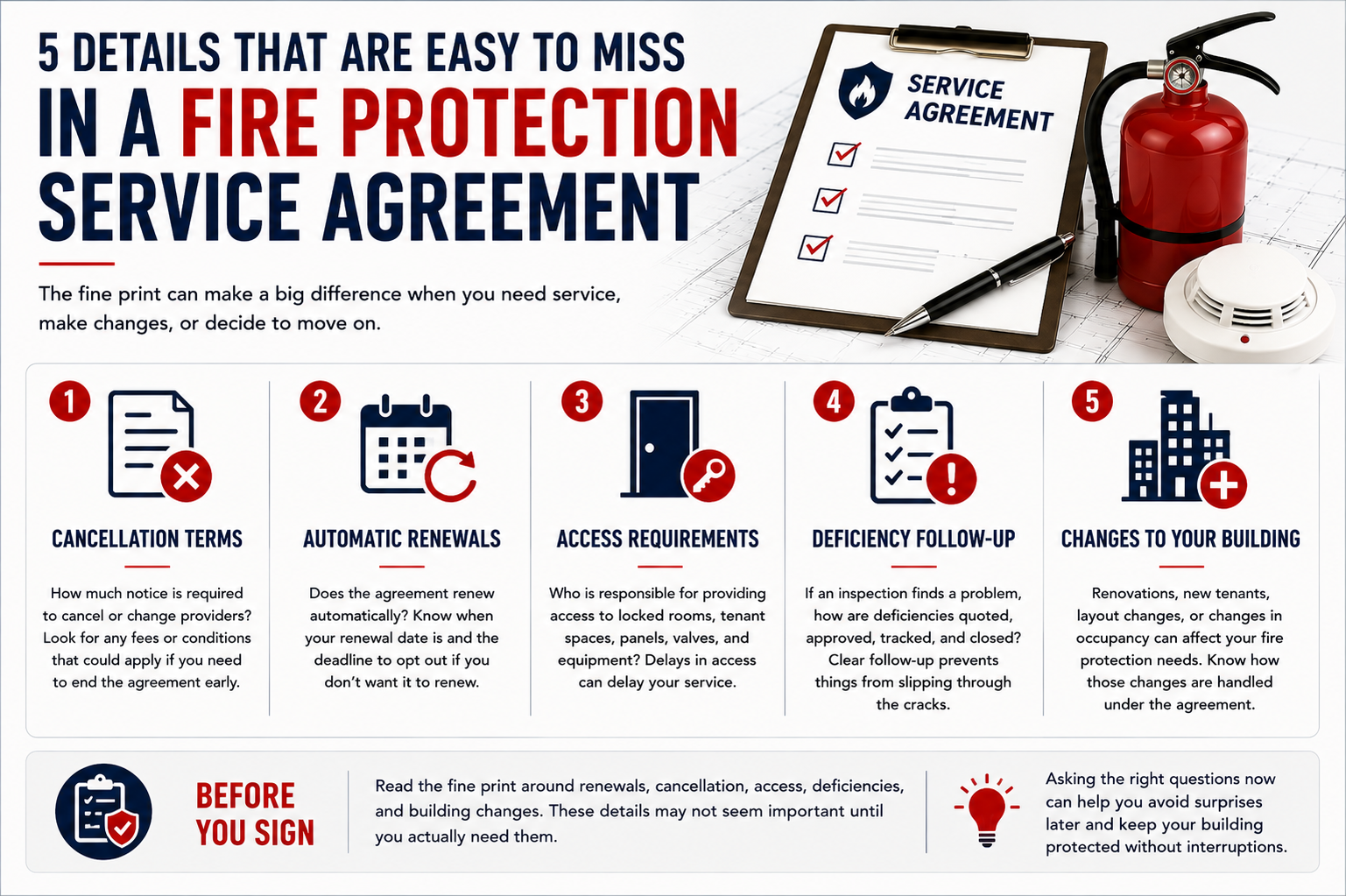
It is easy to think of a fire protection agreement as something you need to get through the next inspection, but a good one should be useful for much longer than that.
Fire protection equipment ages. Batteries wear out, devices eventually fail, and older systems can become more difficult to maintain. Knowing what is coming gives you time to budget and plan instead of dealing with everything as an emergency.
There is also an advantage to working with a provider that gets to know your building. After a few years, they have a history of the equipment, previous repairs, recurring issues, and changes that have been made to the system.
That familiarity can make future inspections and troubleshooting much easier.
Reactive vs. Preventative Fire Protection Service
There will always be situations where something breaks unexpectedly and needs to be repaired. But there is a big difference between occasionally needing emergency service and only calling your fire protection company when something has already gone wrong.
Reactive service deals with problems after they happen. Preventative service is about catching those problems earlier.
Regular inspections give technicians a chance to spot worn components, recurring faults, damaged equipment, and other issues before they become bigger problems. They also give building owners a better idea of what maintenance may be coming up.
| Reactive Service | Preventative Service |
|---|---|
| Service happens after a problem appears | Service is scheduled before problems occur |
| Costs can be harder to predict | Maintenance can be planned and budgeted |
| Problems may cause unexpected downtime | Issues may be caught before they cause disruption |
| Focuses on getting failed equipment working again | Focuses on keeping equipment reliable |
| Often involves urgent service calls | Creates a more consistent maintenance schedule |
The goal is not to eliminate emergency repairs completely. Things can still go wrong. The point is to catch as many problems as possible before they turn into emergencies.
Choose a Provider You Can Rely On
At the end of the day, you are choosing the company that will be responsible for looking after some of the most important safety equipment in your building.
Price matters, but so does knowing that someone will answer when you call, keep up with your inspections, explain problems clearly, and give you proper records of the work being done.
A good fire protection service agreement should mean fewer surprises. You should know what is being maintained, when it needs attention, and who to call when something goes wrong.
If the agreement gives you that kind of clarity, it is doing what it should.