Summary
If you own or manage a commercial building, keeping track of fire protection inspections can feel like a full-time job. Between maintenance requests, tenant concerns, contractors, and everything else that comes with running a property, it is easy for inspection dates to sneak up on you.
The reality is that every fire protection system has its own inspection schedule. Fire alarms, sprinkler systems, fire extinguishers, emergency lighting, kitchen suppression systems, and monitoring equipment all need to be inspected and tested at different intervals.
Staying on top of those inspections is about much more than checking a box. Regular maintenance helps catch small problems before they turn into expensive repairs, keeps your building compliant with applicable codes, and gives you confidence that your life safety systems will work if they’re ever needed.
Why Regular Inspections Matter
Most fire protection systems spend years doing absolutely nothing. They quietly sit in the background until the day they’re needed.
That is exactly why regular inspections matter.
A sprinkler valve could accidentally be left closed after maintenance. A fire alarm battery might no longer provide backup power. A fire extinguisher could slowly lose pressure. A smoke detector might become covered with dust during renovations without anyone realizing it.
None of those issues are usually obvious during a normal workday. They often go unnoticed until an inspection takes place, or worse, until there’s an emergency.
Routine inspections are designed to catch those problems early while they’re still simple to fix.
Every Fire Protection System Has Its Own Schedule
One of the biggest misconceptions is that all fire protection equipment is inspected once a year.
In reality, every system has its own maintenance schedule. Some items require monthly checks, while others are inspected quarterly, semi-annually, annually, or at longer intervals depending on the equipment and applicable standards.
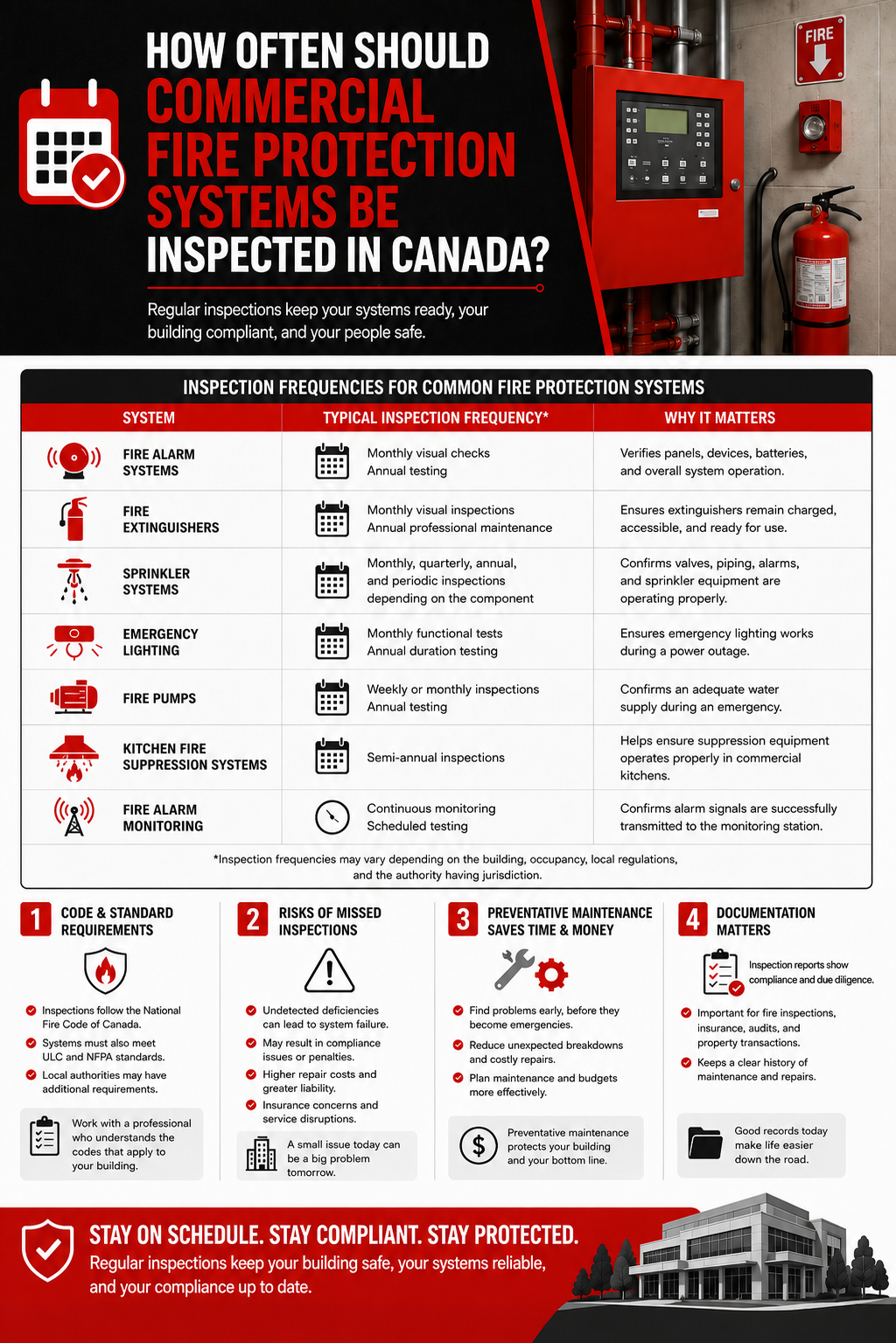
Here’s a general overview of common commercial inspection frequencies in Canada.
| Fire Protection System | Typical Inspection Frequency* | Why It Matters |
|---|---|---|
| Fire alarm systems | Monthly visual inspections and annual testing | Verifies panels, devices, batteries, and overall system operation |
| Fire extinguishers | Monthly visual inspections and annual professional maintenance | Ensures extinguishers remain charged, accessible, and ready for use |
| Sprinkler systems | Monthly, quarterly, annual, and periodic inspections depending on the component | Confirms valves, piping, alarms, and sprinkler equipment are operating properly |
| Emergency lighting | Monthly functional tests and annual duration testing | Ensures emergency lighting works during a power outage |
| Fire pumps | Weekly or monthly inspections with annual testing | Confirms an adequate water supply during an emergency |
| Kitchen fire suppression systems | Semi-annual inspections | Helps ensure suppression equipment operates properly in commercial kitchens |
| Fire alarm monitoring | Continuous monitoring with scheduled testing | Confirms alarm signals are successfully transmitted to the monitoring station |
*Inspection frequencies may vary depending on the building, occupancy, local regulations, and the authority having jurisdiction.
Understanding Canadian Inspection Requirements
Commercial fire protection systems in Canada are maintained according to a combination of fire codes and industry standards.
The National Fire Code of Canada outlines many of the inspection, testing, and maintenance requirements for commercial buildings. Additional standards published by organizations such as ULC and the National Fire Protection Association (NFPA) provide detailed guidance for specific systems and equipment.
Depending on where your building is located, your municipality or province may also have additional requirements.
Because there are multiple standards to consider, many property managers choose to work with a professional fire protection company that can help keep inspections organized throughout the year.
What Happens If Inspections Are Missed?
Missing an inspection does not always cause an immediate problem, but it can create bigger issues down the road.
An overdue inspection could mean a small deficiency goes unnoticed for months. A backup battery may fail. A sprinkler control valve could remain closed after maintenance. An extinguisher may lose pressure. Documentation may be incomplete when an insurance company or fire inspector asks to review your records.
Missed inspections can also lead to:
- Failed compliance inspections
- Delayed repairs
- Higher repair costs
- Increased liability following an incident
- Questions from insurance providers
- Greater disruption when problems are finally discovered
Most of these situations are avoidable with a consistent inspection schedule.
Preventative Maintenance Saves Time and Money
The best time to fix a problem is before it becomes an emergency.
Regular inspections give technicians an opportunity to identify worn components, aging equipment, communication issues, damaged devices, or developing deficiencies before they affect the performance of the system.
That proactive approach often reduces repair costs, minimizes unexpected downtime, and helps building owners plan future maintenance more effectively.
It also makes budgeting much easier because larger repairs can often be anticipated instead of coming as a surprise.

Documentation Is Just As Important
A professional inspection should always leave behind clear documentation.
Inspection reports, service records, deficiency notices, and maintenance history help demonstrate that your fire protection systems are being properly maintained.
Good documentation is valuable during:
- Fire inspections
- Insurance reviews
- Internal safety audits
- Property sales
- Long-term maintenance planning
When records are organized and easy to access, managing compliance becomes much simpler.
Work With a Partner Who Helps You Stay on Schedule
Keeping track of inspection dates across multiple systems can quickly become overwhelming, especially for larger commercial buildings or multi-property portfolios.
A professional fire protection company does more than perform inspections. They help coordinate maintenance schedules, identify deficiencies early, provide organized documentation, and make sure required inspections are completed on time.
That means fewer surprises, less administrative work, and greater confidence that your building remains protected.
Staying Ahead Is Always Easier
Fire protection inspections are not simply another maintenance task. They are an important part of protecting your building, your occupants, and your business.
By following a consistent inspection schedule and addressing small issues before they become larger ones, building owners and property managers can reduce risk, improve reliability, and avoid unnecessary disruptions.
If you are unsure whether your commercial fire protection systems are up to date, Pyrotronics can help review your current inspection schedule, coordinate required testing, and keep your documentation organized so your building stays compliant throughout the year.
Frequently Asked Questions
How often should commercial fire alarm systems be inspected in Canada?
Commercial fire alarm systems typically require regular visual checks along with a more detailed annual inspection and testing. The exact schedule can depend on the system, building type, occupancy, provincial requirements, and the authority having jurisdiction.
How often should fire extinguishers be inspected?
Fire extinguishers should generally receive routine visual checks throughout the year and professional maintenance at least annually. Building staff should also watch for blocked access, damaged equipment, low pressure, missing tags, or signs that an extinguisher has been discharged.
How often do sprinkler systems need to be inspected?
Sprinkler systems have several inspection and testing intervals. Some components may require monthly or quarterly checks, while others are tested annually or at longer scheduled intervals. The correct schedule depends on the equipment installed and the standards that apply to the property.
Who is responsible for keeping fire protection inspections up to date?
The building owner or responsible property management team is generally expected to make sure required inspections, testing, maintenance, and repairs are completed. A qualified fire protection company can help track schedules, perform the work, and keep the related documentation organized.
What happens if a commercial fire inspection is missed?
A missed inspection can allow small deficiencies to go unnoticed and may create problems during a fire department review, insurance audit, or compliance inspection. It can also lead to delayed repairs, incomplete records, higher costs, or increased liability if the system does not perform as expected.
Can one fire protection company manage all inspection schedules?
Yes. A full-service fire protection company can often coordinate inspections for fire alarms, sprinklers, extinguishers, emergency lighting, suppression systems, and monitoring. This makes scheduling and documentation much easier, especially for larger buildings or multi-property portfolios.