
Summary:
Commercial fire alarm systems detect fire conditions using devices such as smoke detectors, heat detectors, and manual pull stations, which send signals to a fire alarm control panel. The panel activates notification devices, initiates building safety functions like door release or elevator recall, and may transmit signals to monitoring services and emergency responders. System design determines detection coverage, occupant notification effectiveness, and compliance with fire code requirements.
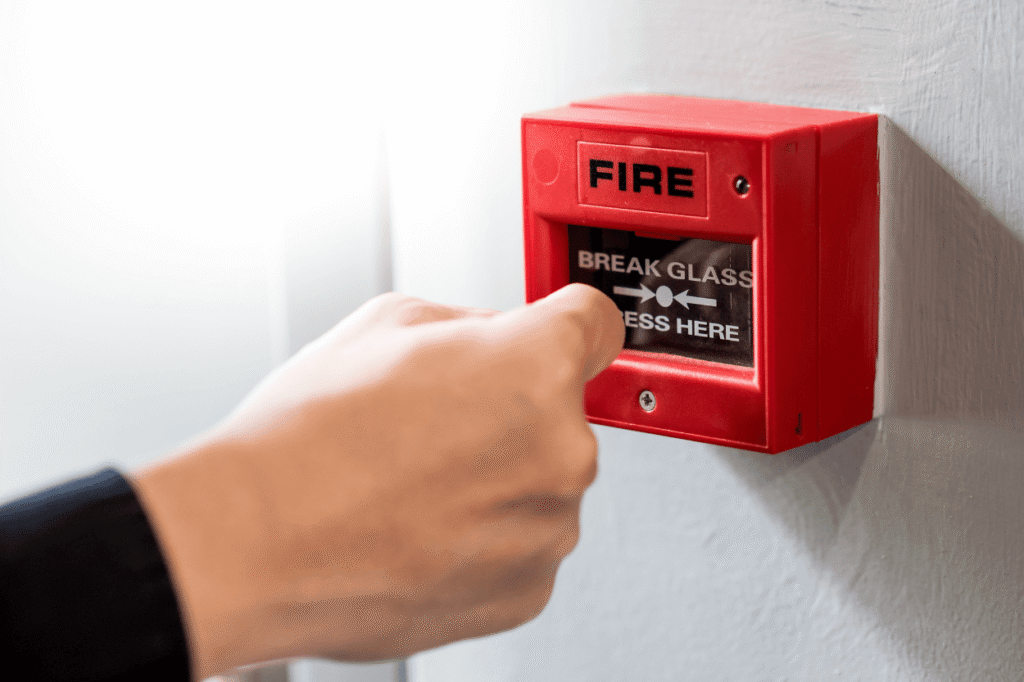
The Core Components of a Fire Alarm System
A commercial fire alarm system isn’t just a few detectors and a bell. It’s a connected system that’s always watching the building and ready to react if something changes.
At the centre is the fire alarm control panel. This is where everything reports back to. The panel continuously monitors detectors and wiring throughout the building. When it receives a signal, it determines what kind of event it is and tells the rest of the system how to respond.
Around the building are detection devices like smoke detectors and heat detectors, along with manual pull stations. These are placed based on how each space is used and what risks are present. An office area doesn’t need the same detection approach as a kitchen or mechanical room.
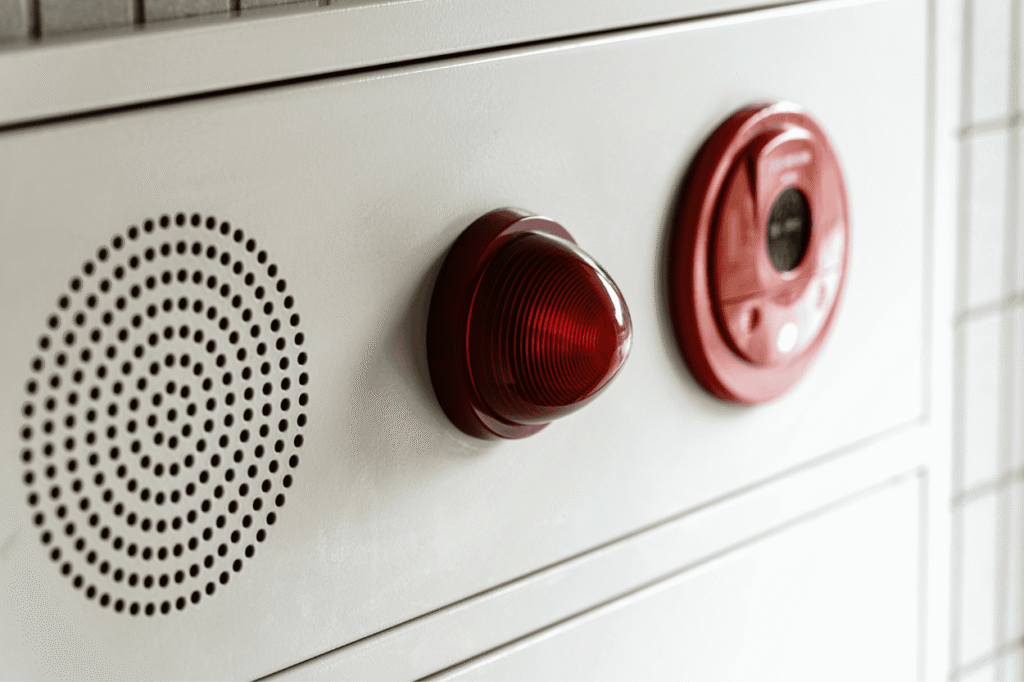
Notification devices are what people notice during an alarm. Horns, speakers, and strobes activate so occupants know something is wrong and can respond quickly. In many buildings, the system is also tied into off-site monitoring, so alarms and faults are automatically transmitted without anyone needing to make a call.
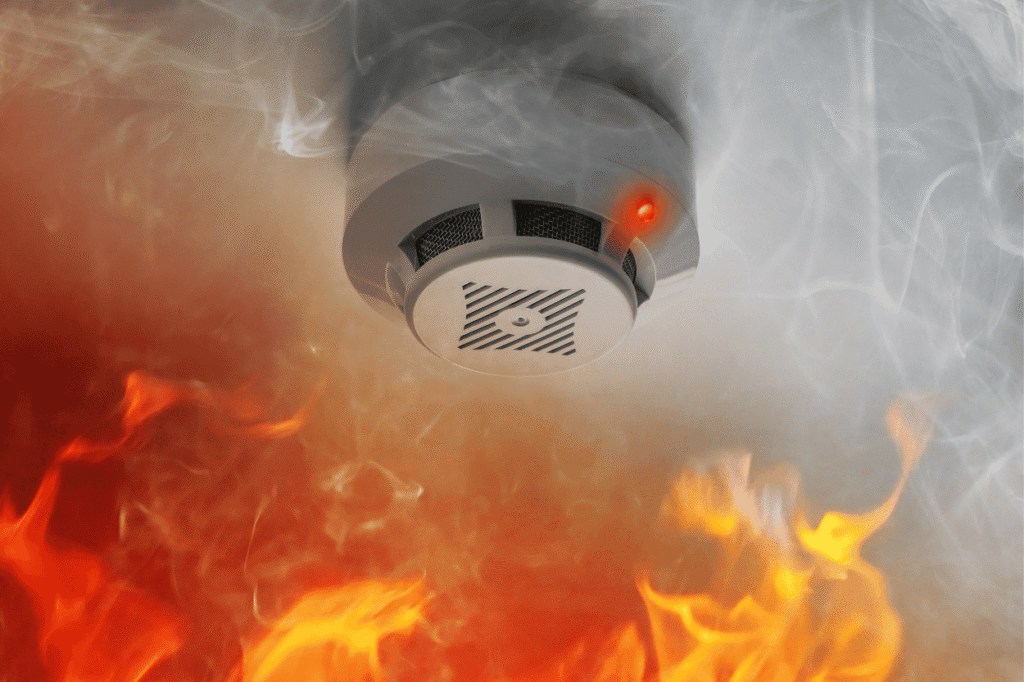
How Smoke, Heat, and Pull Stations Trigger Alerts
Fires don’t all look the same in their early stages, which is why fire alarm systems rely on different types of detection.
Smoke detectors look for the tiny particles produced during combustion. Heat detectors respond when temperatures climb quickly or pass a set threshold. Pull stations give people a way to trigger the alarm themselves if they see smoke or fire before automatic detection kicks in.
When any of these devices activates, it sends a signal through the system wiring back to the fire alarm control panel. The panel identifies exactly which device triggered and where it’s located, then switches the building into alarm.
The mix of devices depends on the environment. Offices and corridors typically use smoke detection for early warning. Areas with steam, dust, or cooking activity often use heat detection to avoid nuisance alarms.
| Device | What It Responds To | Why It’s Used There |
|---|---|---|
| Smoke detector | Combustion particles in air | Early warning in occupied areas |
| Heat detector | Rapid or fixed temperature rise | Kitchens, mechanical, dusty spaces |
| Pull station | Manual activation by occupants | Backup when fire is seen first |
| Duct detector | Smoke in HVAC airflow | Stops smoke spreading through ventilation |
What Happens After an Alarm Is Activated
Once the fire alarm control panel receives an alarm signal, the building shifts into emergency mode almost immediately.
Notification devices activate throughout the building so occupants can hear and see the alarm. In systems with voice capability, speakers may broadcast instructions instead of tones, which helps guide evacuation.
At the same time, other safety features may activate automatically. Fire doors release and close, elevators return to a designated level, and air handling systems can shut down to limit smoke movement between areas.
If the system is monitored, a signal goes out to the monitoring centre within seconds. From there, the fire department and building contacts are notified. No one has to pick up a phone for that chain of events to start.
All of these responses are programmed into the system during installation so they match the building layout and fire code requirements.
Why System Design Matters for Safety and Compliance
Fire alarm systems are designed around the building they protect. When that alignment is right, detection is faster, alarms are clearer, and inspections tend to go smoothly.
Detector placement determines how quickly a fire is sensed. Notification layout determines whether people can actually hear or see the alarm everywhere they need to. Integration with doors, elevators, and ventilation determines how safely the building behaves once an alarm occurs.
When buildings change over time, systems don’t always change with them. Walls move, spaces are repurposed, ceilings are modified. Those changes can create gaps in coverage or lead to inspection deficiencies.
Regular reviews and updates keep the system matched to the building as it exists today. When the design reflects the real space, alarms activate where they should, occupants are alerted clearly, and compliance is much easier to maintain.