Summary
Fire suppression systems and fire sprinkler systems work in very different ways, and each protects against specific types of fire risks. Understanding how they differ helps you decide when you need one, the other, or both for full building protection.
If you’ve ever wondered whether fire suppression and fire sprinkler systems are the same thing, you’re not alone. These terms get tossed around interchangeably all the time, but they’re actually very different systems with unique purposes. And here’s the thing, depending on your building, you might actually need both to stay fully protected.
Let’s break down what makes each system special and why combining them often makes the most sense.
The Role of Fire Sprinkler Systems in Building Safety
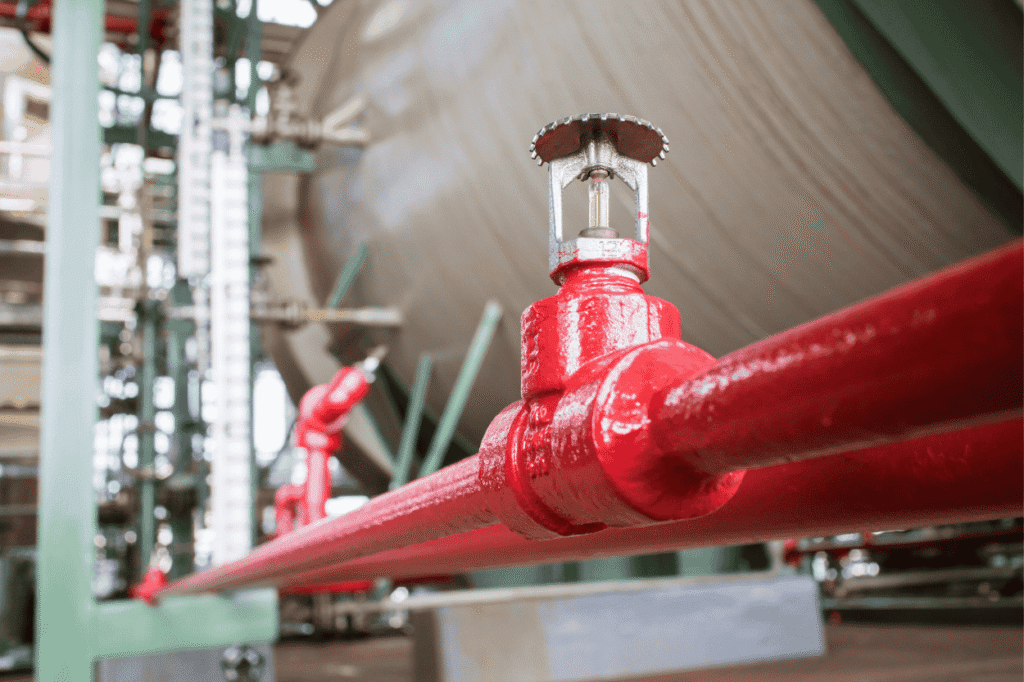
You’ve probably seen fire sprinklers in just about every commercial building you’ve walked into. They’re those unassuming fixtures on the ceiling that most of us don’t think twice about until there’s an emergency.
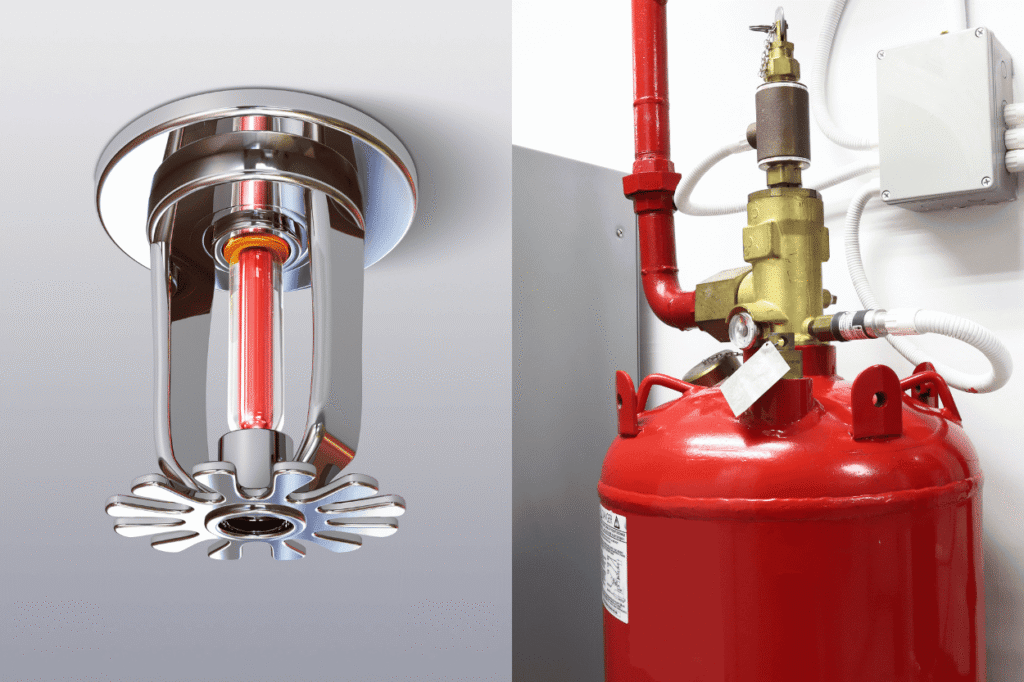
Here’s how they work: each sprinkler head has a small glass bulb or metal element that’s designed to break when the temperature hits around 135-165°F. Once that happens, water starts flowing from that specific head. And no, the entire system doesn’t go off at once like you see in the movies. Only the heads exposed to enough heat will activate, which helps minimize water damage to areas that aren’t affected by the fire.
Sprinkler systems are required by building codes in most commercial properties and apartment buildings for good reason. They’re incredibly effective at putting out fires involving everyday materials like wood, paper, fabric, and plastics. The water does double duty too, it puts out the flames while also cooling down everything nearby so the fire can’t spread. That buys precious time for people to get out safely and for firefighters to arrive.
How Fire Suppression Systems Work and When They’re Needed
Now, fire suppression systems are a different beast entirely. Instead of water, these systems use specialized agents to fight fires, and they’re designed for situations where dumping water everywhere would either be useless or would actually cause more damage than the fire itself.
Think about it this way: if you had a server room full of expensive computer equipment and a fire broke out, would you want thousands of gallons of water flooding the place? Probably not. That’s where suppression systems come in.
Here are the main types you’ll come across:
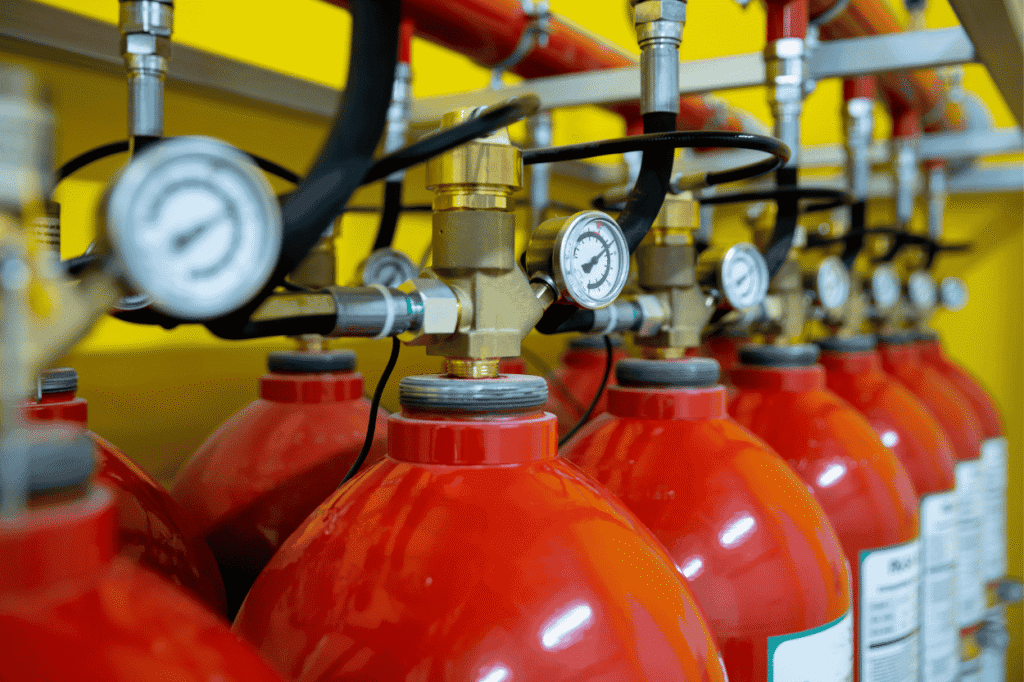
Clean agent systems use gases like FM-200 or Novec 1230 that put out fires without leaving any residue behind. They’re perfect for data centers, server rooms, and anywhere you’ve got sensitive electronics.
CO2 systems work by pushing out all the oxygen in a room, which smothers the fire. You’ll find these in electrical rooms and some industrial settings. Just a heads up though, if CO2 gets deployed, people need to get out fast since there’s no oxygen to breathe.
Dry chemical systems shoot out a powder that’s really effective on grease and oil fires. Commercial kitchens rely on these heavily because water just makes grease fires worse.
Foam systems create a thick blanket that separates fuel from oxygen. These are common in places like aircraft hangars and fuel storage facilities.
The beauty of suppression systems is that they can knock out a fire without destroying everything in the process. A clean agent system might save you from having to replace a quarter-million dollars worth of servers, even though the initial installation costs more than sprinklers.
Key Differences Between Suppression and Sprinkler Systems
| Feature | Fire Sprinkler Systems | Fire Suppression Systems |
|---|---|---|
| Extinguishing Agent | Water | Clean agents, CO2, foam, or dry chemicals |
| Activation Method | Individual heads activate from heat | Detects smoke, heat, or flame and releases agent through the whole zone |
| Coverage Pattern | Only heads near the fire activate | Entire room or zone fills with suppression agent |
| Best For | General building areas and common combustibles | Data centers, kitchens, electrical rooms, sensitive equipment |
| Water Damage Risk | High | Low to none depending on the agent |
| Cost | Lower installation and maintenance | Higher due to specialized equipment and agents |
So what really sets these systems apart?
The agent they use is the obvious one. Sprinklers stick with good old water, while suppression systems use whatever agent makes the most sense for the specific fire risk, whether that’s clean gases, chemicals, CO2, or foam.
How they activate is another big difference. Sprinklers are pretty straightforward, heat melts or breaks the element in each head, and water flows. Suppression systems are more high-tech. They use smoke detectors, heat sensors, or even flame detectors to trigger the system, and when they go off, the whole protected zone gets flooded with the suppression agent all at once.
Coverage patterns differ too. With sprinklers, you get targeted suppression right where the fire is. With suppression systems, it’s all or nothing, the entire room or zone gets treated to ensure the agent reaches the right concentration to kill the fire.
Cost-wise, sprinklers are definitely more budget-friendly upfront and over time. Water is cheap, the pipes are straightforward, and maintenance is pretty standard. Suppression systems cost more to install, the agents themselves aren’t cheap, and you need specialized techs to service them. But in the right situation, that extra cost is absolutely worth it to avoid catastrophic water damage.
Why Some Buildings Need Both for Full Protection
Here’s where it gets interesting. The smartest fire protection strategies don’t make you choose one or the other, they use both where each works best.
Picture a modern office building. You’ve got typical office spaces with desks, paper, maybe some fabric furniture. Sprinklers handle those areas just fine. But then there’s the data center in the basement with all the company’s servers and networking gear. That room needs a clean agent system to protect those assets without drowning them.
Same deal with hospitals. Building codes require sprinklers throughout the facility, which makes sense for patient rooms, hallways, and most spaces. But the MRI room? That needs special suppression because of all the sensitive equipment. And the kitchen? That needs a chemical suppression system specifically designed for grease fires.
Your insurance company gets this too. Buildings with both types of systems properly maintained often get better rates because you’ve seriously reduced the risk of a major loss. And if your business can’t afford downtime, having both systems is even more critical. The suppression system jumps into action fast with minimal collateral damage, while the sprinklers are standing by as backup if things get out of hand.

Maintaining Code Compliance for Both System Types
Here’s the part nobody loves to think about, but it’s absolutely crucial: maintenance and inspections aren’t optional. They’re legal requirements, and honestly, they’re what make sure these systems actually work when you need them.
For sprinkler systems, you’re looking at annual inspections from a certified tech, plus quarterly checks on your alarm valves, monthly looks at gauges and control valves, and a full operational test every five years. It sounds like a lot, but it’s really not that intrusive once you get into a routine.
Suppression systems need even more attention, typically inspections twice a year, monthly checks on certain components, and you’ve got to keep an eye on the suppression agents themselves. Some of them lose pressure over time or have expiration dates, so they need refilling or replacement according to what the manufacturer says.
Keep good records of everything. When the fire marshal shows up or your insurance company wants an audit, you’ll need to prove you’ve been keeping up with maintenance. And make sure your team knows what to expect if these systems activate. For suppression systems especially, people need to know to evacuate immediately, some of those agents are dangerous to breathe.
One more critical thing: only use licensed contractors for installation and service work. Trying to save money with an unlicensed company can void your insurance, put you in violation of fire codes, and worst of all, leave you with a system that won’t work in an emergency.
Fire codes change as new technology emerges and we learn from past incidents, so staying current matters. Major renovations or changing how you use your building can trigger requirements to upgrade to current standards.
Protecting Your Investment
At the end of the day, fire protection isn’t somewhere you want to cut corners. Whether you need sprinklers, suppression, or both, getting the right system and keeping it maintained protects your people, your property, and your business.
If you’re not sure what you’ve got or whether it meets current codes, get a professional assessment. It’s worth it for the peace of mind alone, knowing that if the worst happens, you’re ready.