Services
Clean-Agent/Suppression
Ensure your clean agent and special hazard suppression systems are inspected, certified, and documented to meet NFPA and National Fire Code requirements.
Factory-Trained Technicians for System Inspections and Certification
Certified technicians with manufacture training are available to inspect and certify your systems.
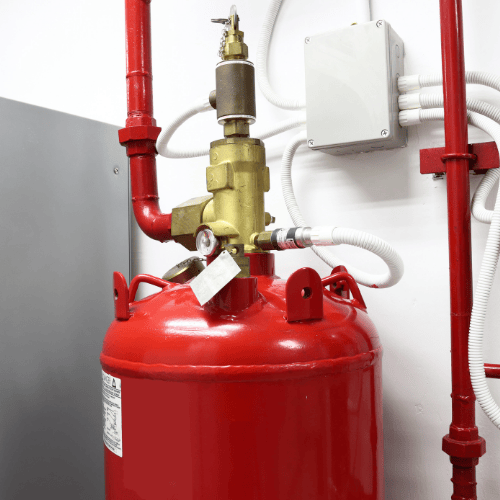
Types of Suppression Systems
Fire suppression systems protect high-value or sensitive environments where water may cause additional damage. These systems provide automatic detection, notification, and chemical or clean-agent discharge to quickly contain fires.
We service fixed kitchen systems, dry chemical, clean agent, mobile systems, water mist, and foam systems across all makes and models.
Why Routine Inspections Matter
Clean agent systems protect critical areas such as data centers, server rooms, control rooms, and specialized equipment spaces. Regular inspections ensure all electrical and mechanical components operate reliably. NFPA 2001 and NFC standards outline monthly, semi-annual, and annual service requirements to maintain readiness.
Engineering and Installation
Through our partnership with Siemens, Pyrotronics delivers customized suppression solutions across Western Canada. We work closely with plant operators, engineers, and AHJs to design systems tailored to each facility’s unique risks.
Inspection, Testing, and Maintenance
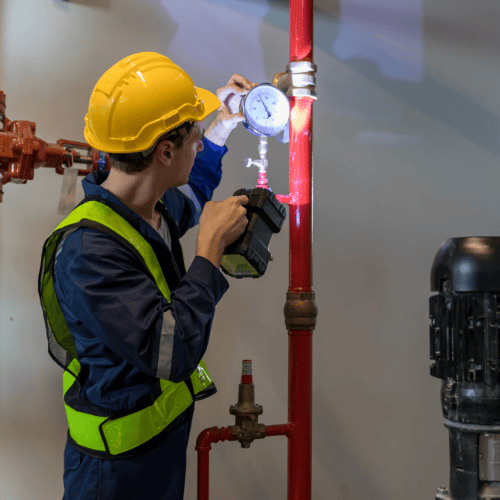
Our technicians test all components including control panels, detection devices, release stations, abort switches, cylinders, piping, and communication pathways. Proactive maintenance reduces downtime, limits false alarms, and extends system lifespan.
Certified Documentation
Comprehensive service reports verify compliance and support regulatory, insurance, and audit requirements.
FAQ
Essential information about inspection, certification, and maintenance of special hazard fire suppression systems.
FAQ
What is a clean-agent fire suppression system?
Clean-agent systems use specialized extinguishing agents such as FM-200, Novec 1230, or inert gases to suppress fires without leaving residue or damaging sensitive equipment. These systems are commonly used in server rooms, electrical spaces, data centres, archives, and other environments where water-based suppression could cause significant loss.
How often do clean-agent systems need to be inspected?
Clean-agent and special hazard suppression systems must be inspected and tested at intervals defined by NFPA standards and manufacturer requirements. Regular inspections verify agent levels, cylinder pressure, detection devices, control panels, discharge piping, and enclosure integrity to ensure the system will operate correctly in an emergency.
What does a suppression system inspection include?
A complete inspection involves testing detection and releasing controls, confirming agent quantity and pressure, examining cylinders and valves, checking piping and nozzles, and verifying that the protected space remains properly sealed for effective discharge. Our factory-trained technicians follow manufacturer procedures to certify that every component meets performance standards.
Why is manufacturer training important for these systems?
Clean-agent systems are highly specialized and vary significantly between manufacturers. Factory training ensures technicians understand the exact design, programming, and service requirements of each system type. This expertise is essential for accurate certification and for protecting sensitive environments where downtime or accidental discharge could be costly.
Can Pyrotronics service existing or older suppression systems?
Yes. Our team supports a wide range of clean-agent and special hazard systems, including legacy installations. We can evaluate the current condition of your equipment, identify required upgrades, and develop a maintenance plan that aligns with current codes and manufacturer guidance.
What happens if a deficiency is found during inspection?
If any part of the system does not meet required standards, Pyrotronics will document the issue and recommend corrective action. Depending on the deficiency, repairs, recharging, component replacement, or room integrity testing may be required to restore full protection and certification.
Are inspection records required for compliance?
Detailed documentation is a critical part of maintaining a clean-agent system. After every service visit, Pyrotronics provides formal reports confirming test results, agent status, and system condition. These records support fire code compliance, insurance requirements, and internal risk management programs.
How do I schedule inspection and certification?
Our technicians can coordinate inspections around your operational needs to minimize disruption to critical spaces. Pyrotronics works with facility managers and IT teams to ensure systems remain protected while meeting all NFPA and manufacturer requirements.
Certified Fire Suppression You Can Rely On
Protect critical equipment and meet code requirements with professional inspection and maintenance of clean agent and suppression systems.