Summary
A commercial fire inspection goes a lot smoother when the building is already in good shape before the inspector arrives. That does not mean everything has to be complicated. In most cases, it comes down to keeping fire protection equipment accessible, making sure records are easy to find, and dealing with small issues before they turn into formal violations.
Inspectors are not only looking for alarms, sprinklers, extinguishers, and exit n They are looking at whether those systems are being maintained and whether the building is ready if there is ever an emergency.
For building owners, property managers, and facility teams, the best way to prepare is to walk the property ahead of time, fix the obvious issues, organize your inspection records, and work with qualified fire protection professionals when something needs service.
What Inspectors Are Really Looking For
A commercial fire inspection is not just a quick walk-through to check whether the building has fire safety equipment installed. The bigger question is whether that equipment is visible, maintained, documented, and ready to work when it matters.
An inspector may look at the fire alarm panel, pull stations, notification devices, fire extinguishers, sprinkler components, emergency lighting, fire doors, exit signs, mechanical rooms, storage areas, fire lanes, and maintenance records. They may also check whether equipment is blocked, damaged, expired, hidden, or hard to access.
This is where buildings often get caught off guard. It is usually not one major issue that causes trouble. It is the little things that build up over time.
A few boxes get left in a hallway. A cart gets parked in front of an extinguisher cabinet. Storage gets stacked too close to sprinkler heads. An emergency light stops holding a charge. A service tag expires. A report gets buried in an inbox and nobody can find it when the inspector asks.
On a regular workday, those things are easy to miss. During a commercial fire safety inspection, they matter.

Image via Unsplash
Common Inspection Problems That Cause Delays
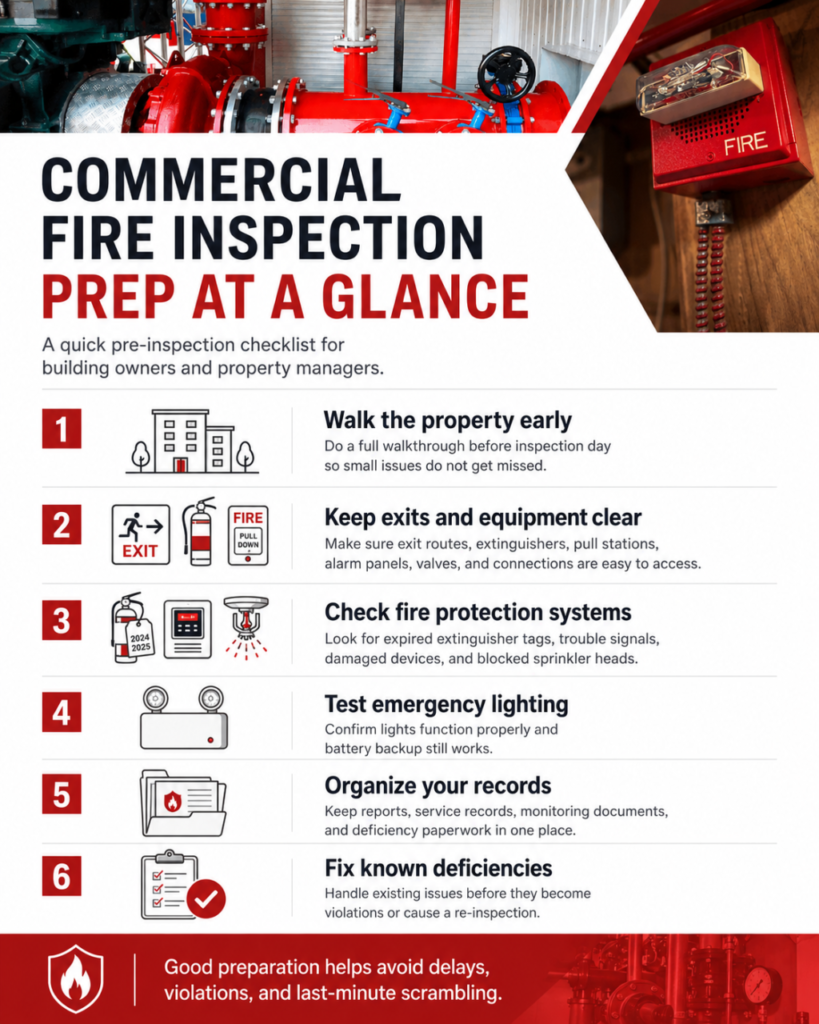
Most inspection problems are preventable. Blocked exits are one of the biggest issues because they affect how people leave the building in an emergency. Fire extinguishers, pull stations, sprinkler valves, fire alarm panels, and fire department connections also need to be clear and easy to reach.
Records can cause delays too. If the inspector asks for fire alarm testing records, sprinkler inspection reports, extinguisher service tags, emergency lighting records, monitoring documents, or proof that previous deficiencies were repaired, those records should be ready.
If records are missing, scattered between inboxes, or out of date, it can make the building look poorly managed, even if service work has been done.
A simple fire inspection checklist helps keep everyone on the same page. It gives the property team something practical to review before inspection day instead of trying to remember everything at the last minute.
| Inspection Area | What Inspectors May Check | Common Problem | How to Prepare |
|---|---|---|---|
| Exit routes | Clear paths, exit doors, visible exit signs | Storage or furniture blocking egress | Walk all exit paths before inspection day |
| Fire extinguishers | Access, tags, mounting, condition | Expired service tags or blocked cabinets | Confirm tags are current and units are visible |
| Fire alarm system | Panel status, pull stations, devices, reports | Trouble signals or missing test records | Review recent reports and correct deficiencies |
| Sprinkler system | Valves, clearance, inspection records | Obstructed heads or missing documentation | Check clearances and keep reports ready |
| Emergency lighting | Function and battery backup | Lights fail when tested | Test ahead of time and repair weak units |
| Fire safety records | Testing, repairs, deficiencies, service history | Records are hard to find | Keep one organized binder or digital folder |
Get Your Records Organized Before the Inspector Arrives
Good records can make a big difference during an inspection. They show that the building is being looked after and that testing, maintenance, and repairs are not being handled casually.
The best thing you can do is keep all fire safety records in one place. That could be a binder kept on site, a shared digital folder, or both. What matters is that the person meeting the inspector can find what they need quickly.
Fire alarm reports, sprinkler inspection reports, extinguisher service records, emergency lighting tests, monitoring documents, repair invoices, and deficiency notices should not be spread across several inboxes or filing cabinets.
It also helps to keep deficiency reports with the proof that the issue was fixed. If a technician noted a problem during a previous inspection or service call, the follow-up record should show what was repaired and when. Inspectors are not just looking to see that an issue was found. They want to see that it was dealt with.

Image via Unsplash
Fix Known Deficiencies Before They Become Violations
If you already know something is wrong, it is better to deal with it before inspection day. A fire alarm trouble signal, damaged device, leaking sprinkler component, expired extinguisher tag, blocked fire department connection, or failed emergency light is not something to wait on.
Preventative maintenance helps because it gives you time. If an issue is found early, there is usually time to book service, order parts if needed, complete the repair, and update the records. If the same issue is found during the inspection, it can lead to a failed inspection, a re-inspection, extra costs, and a lot more pressure to get it fixed quickly.
For larger buildings, warehouses, commercial sites, or multi-property portfolios, a pre-inspection walkthrough can be worth doing. It does not replace the official inspection, but it can help spot the obvious problems before they become written violations.
It also gives your team a better idea of what has already been handled and what still needs attention.
Why the Right Fire Inspection Company Matters
Fire code compliance in Canada is not always one-size-fits-all. Requirements can vary based on the type of building, how it is used, the province, the municipality, insurance requirements, and the authority having jurisdiction.
That is why it helps to work with a qualified fire inspection company instead of trying to guess your way through it.
Certified fire protection professionals can help with fire alarm testing, sprinkler inspections, monitoring documentation, deficiency repairs, extinguisher service, emergency lighting, and the records that go along with that work. These are not areas where building staff should have to figure things out on their own.
When the work is handled properly, you get better documentation, fewer surprises, and more confidence going into the inspection.

Image via Unsplash
Staying Ready Is Easier Than Catching Up
Preparing for a commercial fire inspection is really about staying ahead of small problems. Clear exits, accessible equipment, current service records, working emergency lighting, and corrected deficiencies all show that the building is being managed with safety in mind.
It also helps protect the people who use the property every day. Passing the inspection matters, but the bigger goal is having a safer building.
If your building has an upcoming inspection, Pyrotronics can help review your fire protection systems, identify issues before inspection day, and provide the documentation needed to support ongoing fire code compliance in Canada.